
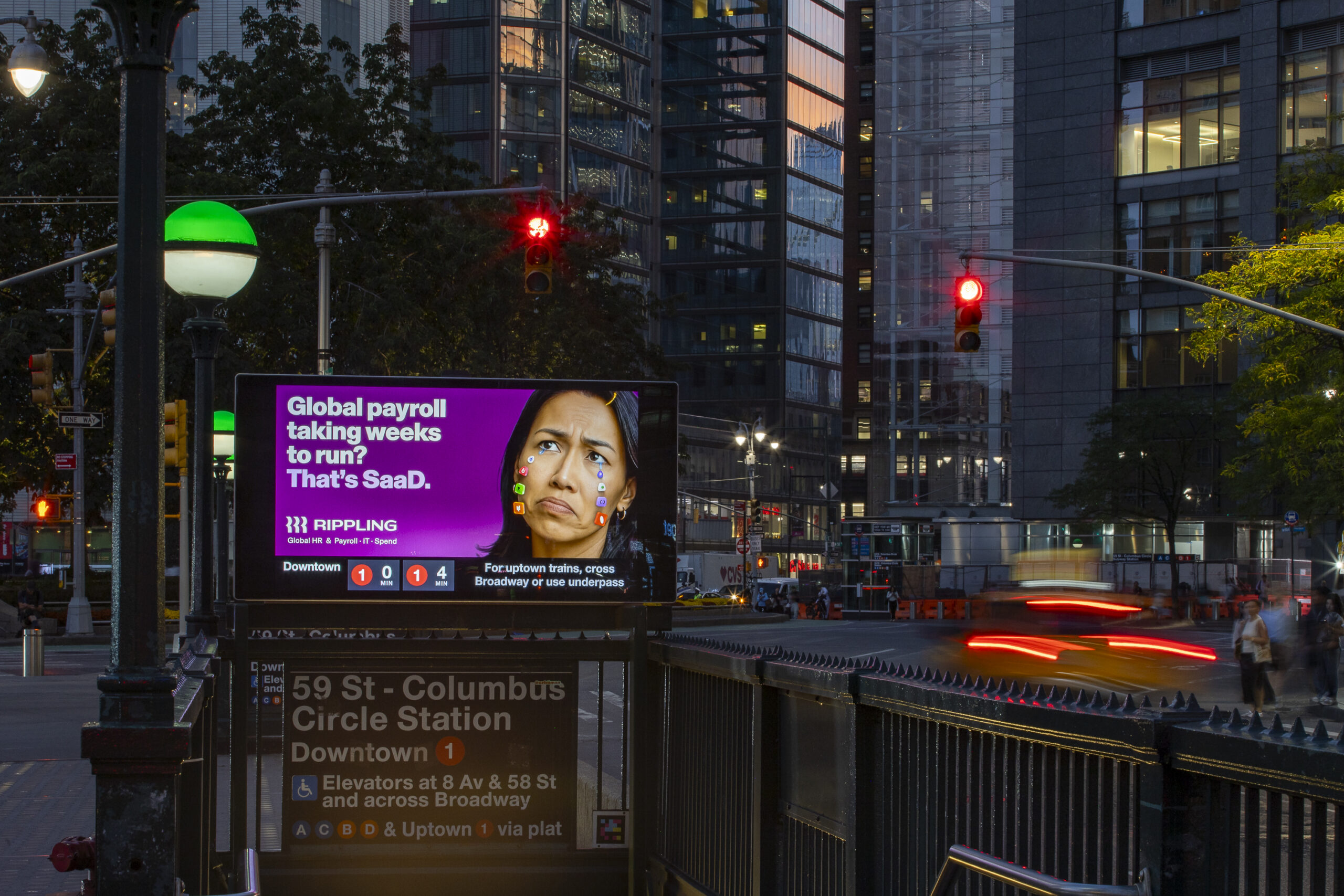
Before you pick an OOH format or location, you need to understand your target customer well enough to find them in the real world and put your message directly in front of them.
You need to know who they are, how they move through the day, and where they spend time offline. That’s the foundation everything else gets built on. Without it, you’re not really planning. You’re window shopping and hoping something sticks.
Age, income, and job title are a starting point, but they only tell part of someone’s life. The more valuable questions are behavioral. Where does this person work? How do they get there? Which conferences do they attend for work, which retail districts do they shop in, and which lunch spots have quietly become part of their routine?
A sharp audience profile gives you one person with a real, predictable routine. That’s what OOH planning actually requires.
Media planning is vital for OOH success
Every environment your audience moves through creates a different context, and context changes how your brand resonates. A message built for a Monday morning commute should function differently than one seen at an industry conference on a Thursday afternoon. The planning rule is simple: follow where your audience naturally gathers, not where inventory happens to be cheapest or easiest to secure.
The inputs you need before you talk to any vendor
In many cases,OOH conversations start too late. By the time a brand is talking to a vendor rep, the conversation is already centered around what inventory is available instead of what the campaign actually needs. The result is a media plan shaped by availability, not strategy, and that’s rarely the formula for a successful campaign.
Show up with these five things defined first.
ICP profile
Your ICP profile should answer one question: who are you trying to reach, and where do they spend time in the real world?
For B2B, that means understanding industry, company size, job function, and seniority. For B2C, it means demographics, lifestyle, and behavior. Either way, the profile needs to be detailed enough to connect to real places and routines.
Geographic targeting
A B2B buyer might spend time around office corridors, airports, commuter routes, and lunch spots near headquarters. A B2C buyer might show up during grocery runs, gym visits, errands, and daily commutes.
If you can picture where your audience works, travels, eats, shops, and spends time during the week, you can plan an effective OOH campaign. If you can’t, you’re guessing.
Which cities or regions matter most, and how do you know? A gut feeling is a starting point, but it should never drive a budget decision. The goal is a short list of markets you can prove, not a wish list based on where your leadership team works.
Campaign objective
The goal of the campaign should guide every decision that comes after it. A brand awareness campaign needs a different approach than an ABM campaign, an event push, or a competitor-focused campaign.
Each one requires different formats, locations, and levels of coverage. If you start talking to vendors before the objective is clear, it becomes difficult to judge what is actually a good fit. Without a defined goal, almost every option can sound like the right one.
Timeline
Different OOH formats run on very different production schedules. Static bulletins, digital screens, transit wraps, and experiential builds each have their own timelines for design, approval, printing, and installation. If you’re planning around a launch or event, work backward from that date before you commit to a format. Get attached to something that can’t be executed in time and you’re back to reacting instead of planning.
Budget
Budget decides the shape of the campaign, not just the size of it. Are you better off owning a few priority markets, or spreading coverage across more places with less impact? Should you invest in one high-visibility corridor or several smaller placements? Know your number before the vendor conversation starts. Without it, every option sounds possible, and vendors will fill that vacuum for you.
Budget also affects format decisions. Large-format bulletins, premium wallscapes, airport dominations, and experiential activations demand different levels of production and media investment than transit shelters or smaller digital units.
Knowing your actual range early keeps planning grounded in reality and prevents conversations from drifting toward placements that look impressive on a deck but never get bought. Setting the budget before vendor conversations begin changes the dynamic entirely.
How to evaluate an OOH media plan
Not all media plans are actually plans. Some are availability reports dressed up with logos and reach numbers.
You can usually tell within the first few slides whether a plan was built around your audience or around available inventory. One shows its work: here’s who we’re reaching, here’s where they concentrate, here’s why these markets and placements follow from that. The other leads with what was available and fills in the audience rationale after the fact.
Ask your planner to explain each placement presented. Why this billboard, why this transit line. The answer should trace back to your ICP. If it doesn’t, and “high-traffic area” is the best they’ve got, the selection was driven by inventory, not audience thinking.
The formats should match the objective. Broad awareness and account surround don’t show are the same logic, and a plan that treats them the same way wasn’t built around your goals. It was built around the vendor’s inventory.
Every market on the plan should earn its place. Where is your audience actually concentrated? Where is pipeline already active or growing? If you can’t clearly answer those questions, the budget isn’t being strategically directed. It’s just being spread around.
If impression volume is leading the conversation, that’s a problem. Impressions are easy to generate and hard to evaluate without context. Reach numbers shouldn’t come before the rationale for why the audience and make sense. High impressions in the wrong places are just expensive noise.locations
Where audience-first planning breaks down in practice
Once you’re past that step, the real work starts where you apply it under the friction of execution. Audience-first plans rarely fail because the strategy was wrong. Instead, it’s a result of the original logic gets worn away by compromises made between the initial brief and the final purchase.
Reason 1: compromising on the plan
Timeline is usually the first thing to break, and it sets everything else off course. Maybe the campaign got approved late. Or perhaps the ICP work meant to guide market selection gets replaced by “let’s just start with New York and Chicago.” One compromise leads to the next until urgency quietly buries the strategy. What’s left looks like a plan. In reality, it’s guesswork.
Reason #2: internal alignment breaks
OOH decisions rarely fall to one person. Brand, demand gen, field marketing, and the executive team all have a seat at the table, and each brings different priorities.
Without a shared ICP and a clear objective locked in before vendor conversations start, the media plan stops being about audience data and becomes about keeping people happy. The budget gets split, coverage thins, and the campaign reaches many places without making a real impact anywhere.
Reason #3: vendor dependency.
OOH vendors are good at selling what they have. That’s less a criticism than a reality of how their business works. Obviously, everything they offer is shaped by their inventory. A vendor with strong transit coverage will emphasize commuter audiences. One with a dense digital network will make a compelling case for flexibility and dynamic creative. Both might be right for a different campaign. Neither is automatically right for yours. Without a defined audience profile and geographic rationale before those conversations start, you end up evaluating pitches without a real filter. The most persuasive presentation wins instead of the most strategically sound one.
The brands that get consistent OOH results aren’t outspending everyone. They’re out-disciplining them. They follow the sequence because it works: audience before geography, geography before format, format before buying. They protect the planning phase even when timelines tighten, and they walk into vendor conversations with a strategy already built.
Your audience isn’t waiting for your campaign. They’re already moving through the physical world on their own schedules, routes, and habits. The job is to understand that movement well enough to show up where it matters, before any money is spent.
Why better planning replaces the measurement debate
People often ask how we’ll measure OOH success: did it drive sales, who gets the credit, how do we explain it to the CFO? Those are valid questions, but sometimes they hide a different worry. The plan doesn’t feel defensible, so measurement becomes the backup argument. That’s the wrong way around.
If the plan is built from real audience data, with placements tied to where your ideal customer actually is and formats chosen to meet a clear goal, you don’t need a dashboard to justify the spend. The plan explains itself before the campaign runs. You can show why each market was chosen, which places your audience moves through, and how each format supports the objective.
Measurement tools tell you what happened. Planning intelligence explains why you did it, and that is the more useful thing when you need to make the internal case.
So ask a different question: not “how will we measure this?” but “how was this planned?” A thorough answer to that question makes the measurement question much easier to answer.
Think first, buy later
OOH works best for brands that think before they buy. Know who you’re trying to reach, where those people move in the real world, and what you want the media to accomplish before you pick placements. The order matters: audience first, geography second, format and market selection next, buying last.
A lot of times campaigns jump straight to buying and try to work backward, and that is why a lot of OOH spend only produces a nice photo for the recap deck. Onescreenis built around the right order of operations: planning comes first, the data informs geography, and buying follows the strategy rather than driving it.
Get the sequence right and the media will do its job: put your brand in front of the right person, in the right place, at the right time.
If you’re looking for an out of home advertising partner that obsesses over this level of planning to make your campaign succeed, talk to our team.