
ABM campaigns always look great when your view is a dashboard.
The numbers pile in with intent data flagging the right companies, data enriching those you don’t, and every buying committee member got personalized email and LinkedIn ads.
That vision falls apart when the VP you’ve chased for six weeks takes a meeting and hasn’t a clue who you are. The
Casey Patterson, Director of North America ABM at Snowflake, summed up the idea on the Built for Brand podcast: “Brands are built one place at a time.”
But most organizations trying to build brand without asking the right questions:
- How many other vendors sent that same VP a “personalized” sequence this week?
- What happens to your retargeting ad when their IT team rolls out a new ad blocker?
- Has anyone on the buying committee ever mentioned your brand to a colleague out loud?
Say one of your target accounts has an office in Boston’s Seaport.
Your ABM platform can reach its buying committee through inboxes, LinkedIn, and display ads.
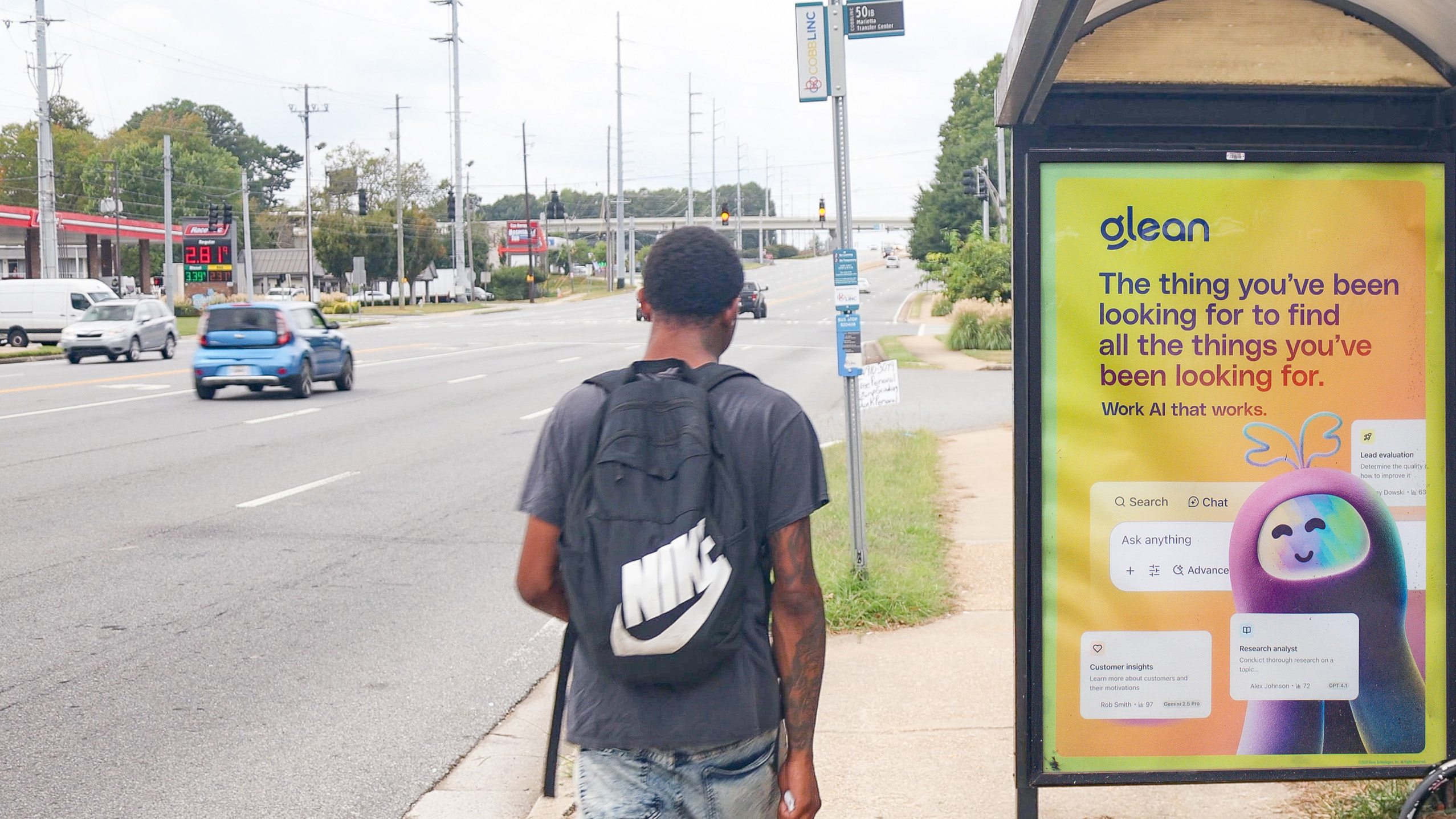
But those same people eventually tear their eyes away from their tiny screens and walk past the same transit station, bus shelter, or street-level screen every morning on the way to work. Putting your brand there in the real world takes the campaign out of the browser (and those tiny screens) and puts it into a place the account already knows.
Below, you’ll see why digital- or online-only ABM underperforms and how to add a real-world step without ripping out your stack. We believe an ABM campaign works best when at least one touch shows up somewhere the account physically goes, because that’s the one touch they can’t close with a tap.
What is an ABM campaign, and where does the standard version stop?
At its simplest, an account-based marketing (ABM) campaign targets specific high-value companies instead of a broad audience. Marketing and sales identify key accounts and reach their decision-makers through personalized email, LinkedIn, display ads, and content.
The standard ABM playbook usually stops at the screen. Once buyers leave their inbox, browser, or social feed, the campaign disappears. Real-world media extends ABM into the places those accounts actually go.
3 reasons a software-only ABM campaign gets ignored
Your target accounts are likely everyone’s target accounts. If a company fits your ICP, it probably fits your competitors’ too. So the account based marketing tactics that looked clever on the whiteboard land next to five sequences built from the same template. Three things work against yours:
1. Personalized email reads as automation
Merge fields stopped signaling effort a long time ago and templated “personalization” is recognizable within a line or two, especially when competitors are running the same tooling send the same shape of message.
The email gets delivered and earns the same attention as every other email that week. But that’s if security filters and promotions tabs don’t catch your sequence before it ends up in the inbox.
2. Retargeting ads blend into the page
Digital ad fatigue sets in fast when display and paid social follow the account around:
- Banner-style placements get tuned out by habit
- Ad blockers and privacy settings cut reach into the exact companies you picked
- Frequency caps force a tradeoff between reach and repetition
An impression nobody remembers still counts in the report and does nothing in the deal.
3. Digital outreach tends to remain private
An email reaches one person, and a LinkedIn ad reaches one feed but your buying committee is likely not talking about them.
There’s no shared moment to reference and whatever awareness you got likely stays with whoever happened to open the message.
With six or more people weighing the decision, a touch only one of them sees carries very little weight.
A physical touchpoint does 3 things your sequence can’t
A billboard along a route into your buyers’ neighborhood puts its message in front of employees heading to the office. That physical presence adds three things to an account based marketing campaign:
1. It can’t be closed, so your message keeps showing up. There’s no unsubscribe link, skip button, or tab to close. A buyer who passes the placement on Monday can see it again on Thursday. Those repeated encounters give your name more chances to stick.
2. It sits outside digital filters, so it creates another way to reach executives. An email filter can block your sequence, but it doesn’t affect a billboard. A placement along a relevant commute gives you another opportunity to reach senior buyers. Digital out-of-home screens can also be scheduled by location and time of day.
3. It gives the buying committee something to talk about. If the CFO and IT director both pass your Seaport placement, your brand becomes a shared reference point. Sales gets a natural opener: “You may have seen us on the way in.” And a comment in an internal meeting can introduce your name to colleagues who never saw the ad themselves.
4. It signals that you are a legitimate organization. A fake company can send your email and run your LinkedIn ads. Buying a billboard outside the account’s office takes real money and a public name. The board proves you exist.
Casey’s team at Snowflake uses that opener on purpose. “You can really make those people feel special and like you really saw them,” she said. “Like, ‘Did you see our billboard out there? We put that up for you.’”
Want to see which placements reach your target accounts? Talk to our team about what your next OOH campaign could look like.
How to add a real-world step to your ABM campaign in 4 moves
The software stays. Intent data still picks the accounts, and email and LinkedIn still carry the detailed messaging. The physical touch slots into the sequence as the step that makes the rest land.
1. Map target accounts to physical places
Start with where the buying group actually spends time:
- Pull HQ and major office locations for tier-one accounts
- Add commuter routes, nearby transit, and the airports their teams fly through
- Check the conference calendar for events the buying group attends
Location data turns an account list into a media plan. As Casey described Snowflake’s approach: “It really is about a certain location and gaining traction within the people in that location, and treating them as individuals who are buyers and who are seeing things on their way to work.”
2. Time the placement to the sequence, or it plays as a standalone brand ad
The board should arrive before the ask:
- Launch the physical touch one to two weeks ahead of the email push
- Run conference placements in the days leading into the event
- Line up SDR outreach while the board is still live
The first email then arrives from a name they already recognize.
3. Match creative across channels, or buyers won’t connect the touches
Every channel should look like part of the same campaign:
- Use the same headline and visual on the board, the ad, and the landing page
- Keep board copy short enough to read at driving speed
Consistent creative lets each channel borrow recall from the others.
4. Measure lift at the account level, or the physical step gets written off
Track the signals that show an account moved:
- Branded search and direct traffic from target-account regions
- Engagement from exposed accounts compared with unexposed ones
- Sales notes whenever a prospect mentions seeing the campaign
Casey reads out-of-home as one layer of the account plan. “It’s not its own entity that you can point to and say, ‘We spent this much, and we got this much,’” she said. “It’s a part of a layered, location-based approach.”
If measurement is the objection holding your team back, it has better answers than it used to.
What an ABM campaign looks like with one physical step
Snowflake ran this play around a large healthcare customer headquartered outside Minneapolis. The account had an in-person, hands-on lab coming up, and the ABM team wanted more momentum behind it.
“We did four billboards surrounding their headquarters,” Casey said. Onescreen helped choose the locations. More than 500 people attended the lab, third-party intent surged, and Snowflake’s engagement score for the account doubled while the boards were live.
A growth leader at a corporate gifting company described a similar campaign on a Onescreen webinar about OOH and ABM.
Our team placed a billboard near a target company’s headquarters, sent direct mail to each member of the buying committee, and ran digital ads with the same message.
That structure maps to a six-week sequence:
| Week | Touchpoint | Job it does |
|---|---|---|
| 1 to 4 | Billboard or DOOH near target HQ | Builds recognition before outreach |
| 2 | Direct mail to each committee member | Gives every stakeholder a physical reminder |
| 2 to 5 | LinkedIn and display ads, same creative | Reinforces the board online |
| 3 to 5 | SDR email and calls | Opens with a reference buyers recognize |
| 6 | Branded search and engagement review | Shows which accounts moved |
Each channel does the job it handles best, and the board gives every other touch something to point back to.
ABM your buyers can’t close
You picked the right accounts and built a careful sequence, and they still don’t remember you. Every touch lived somewhere they could skim, mute, or close.
Onescreen plans B2B out-of-home campaigns around your target accounts. It maps your ICP to the offices, commuter routes, airports, and conference corridors they actually use, then sets up branded search and traffic lift so you can see which accounts moved.